4. The first XGS 3300
At the start of 2026 - nine months before these pages were written - the first Sophos XGS 3300 arrived, and with it a new chapter: a generation whose support was still running, different hardware, and a story of its own. I bought it for one reason - to reach the goal.
It is a rack appliance: twelve front ports, a bay for an expansion module, and a Cavium OCTEON TX coprocessor - a different family from the XGS 136's entirely, with a different design and a different protocol. I explored it the way I had explored the others: hardware first.
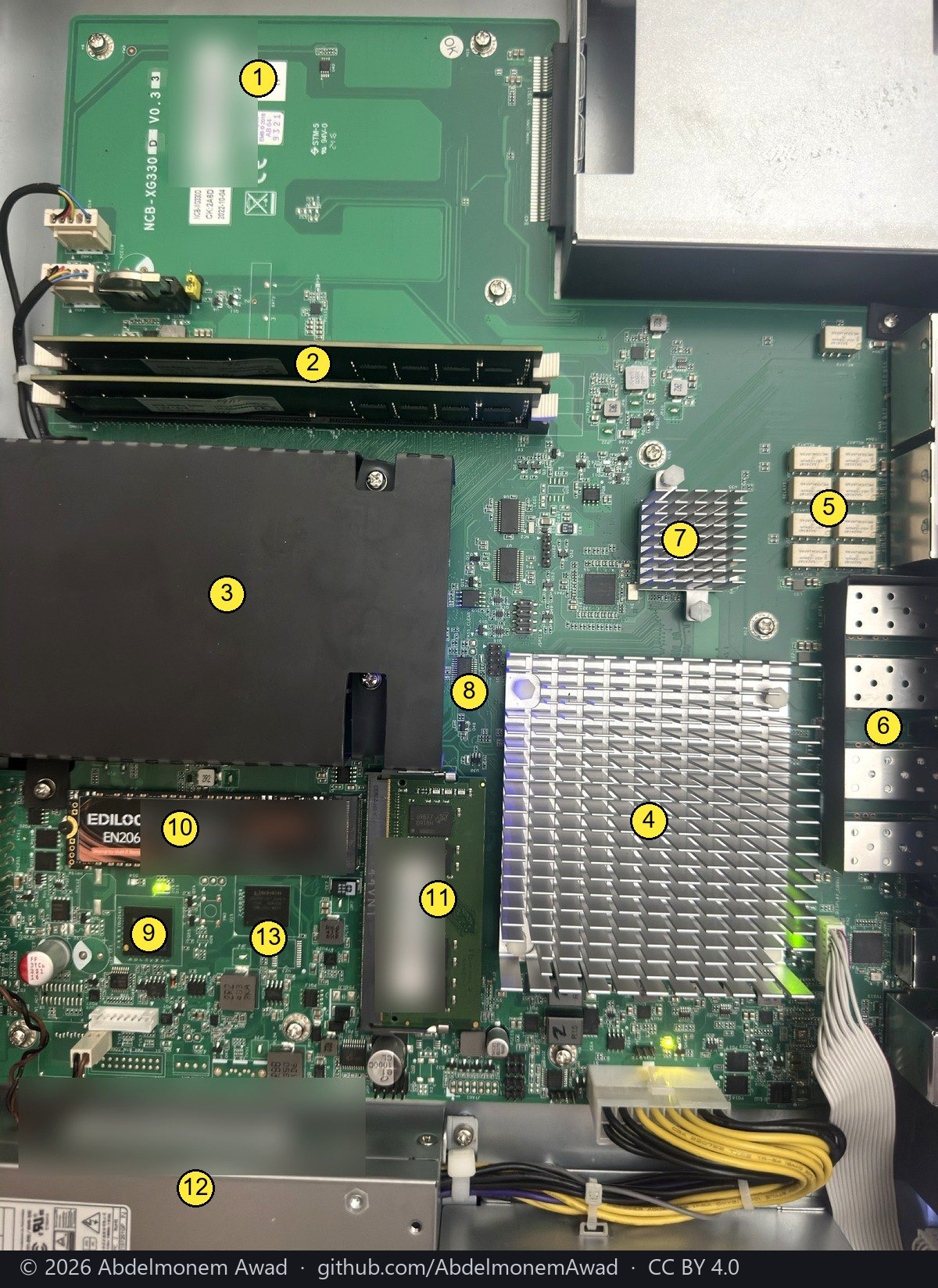
Opened and photographed for the repository on 2026-10-01, and again later in better light.
A board named after the XG 330
One detail on the coprocessor's carrier board closes a circle. Its silkscreen reads
NCB-XG330D V0.3, dated 2022-10-04 - an engineering part named for the XG 330, the very
appliance this whole comparison had started beside. The name on the board is not the name in the
sales catalogue, and anyone matching boards to models should know it.
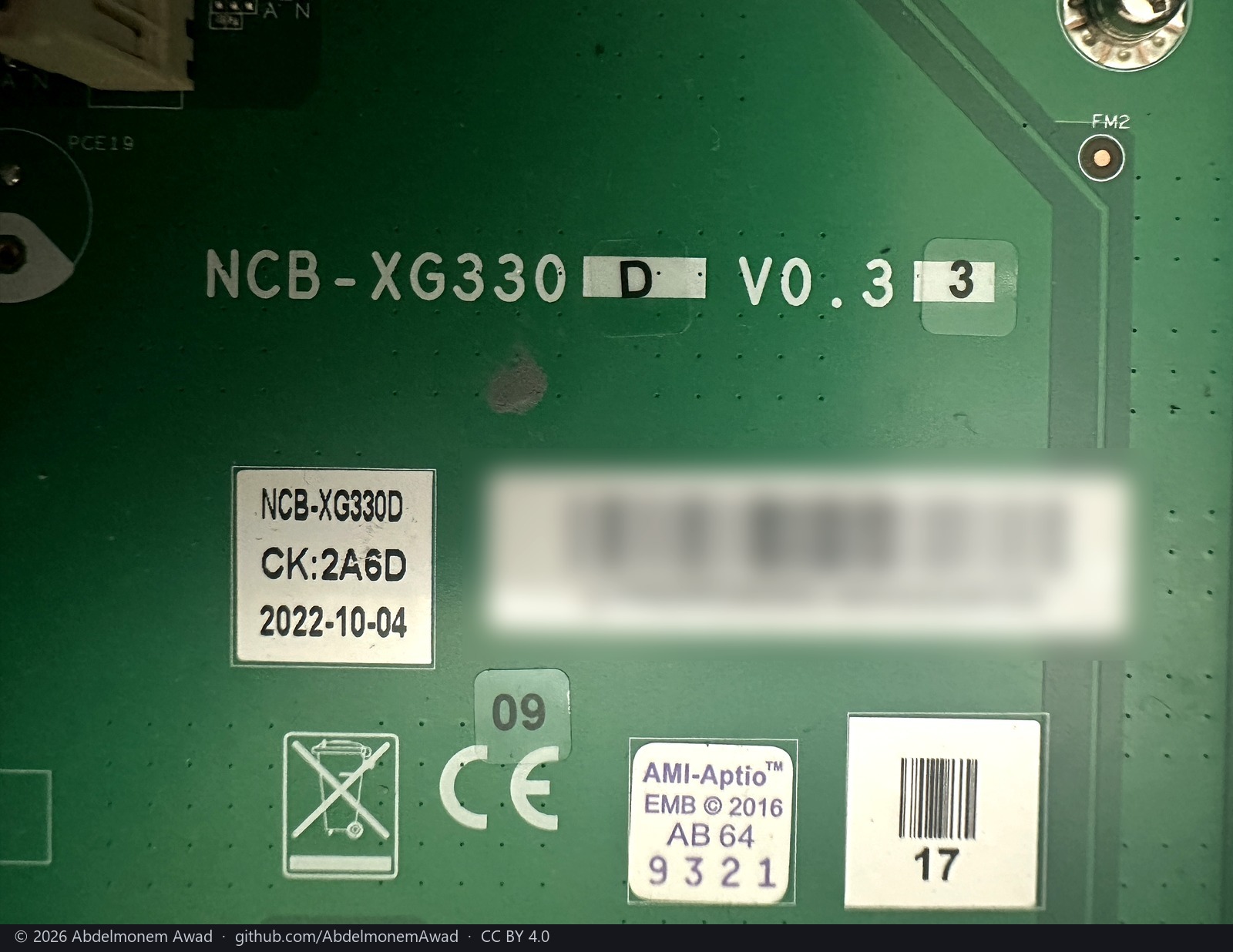
The headers, and the adapters
The board brings out far more than a console. Beside the carrier sit JUART1, JTAG1 and JTAG2,
JSPI1 and JSPI2, four selection jumpers, and one header labelled PASS_CLEAR - the maker's own
service access, laid out in a row.
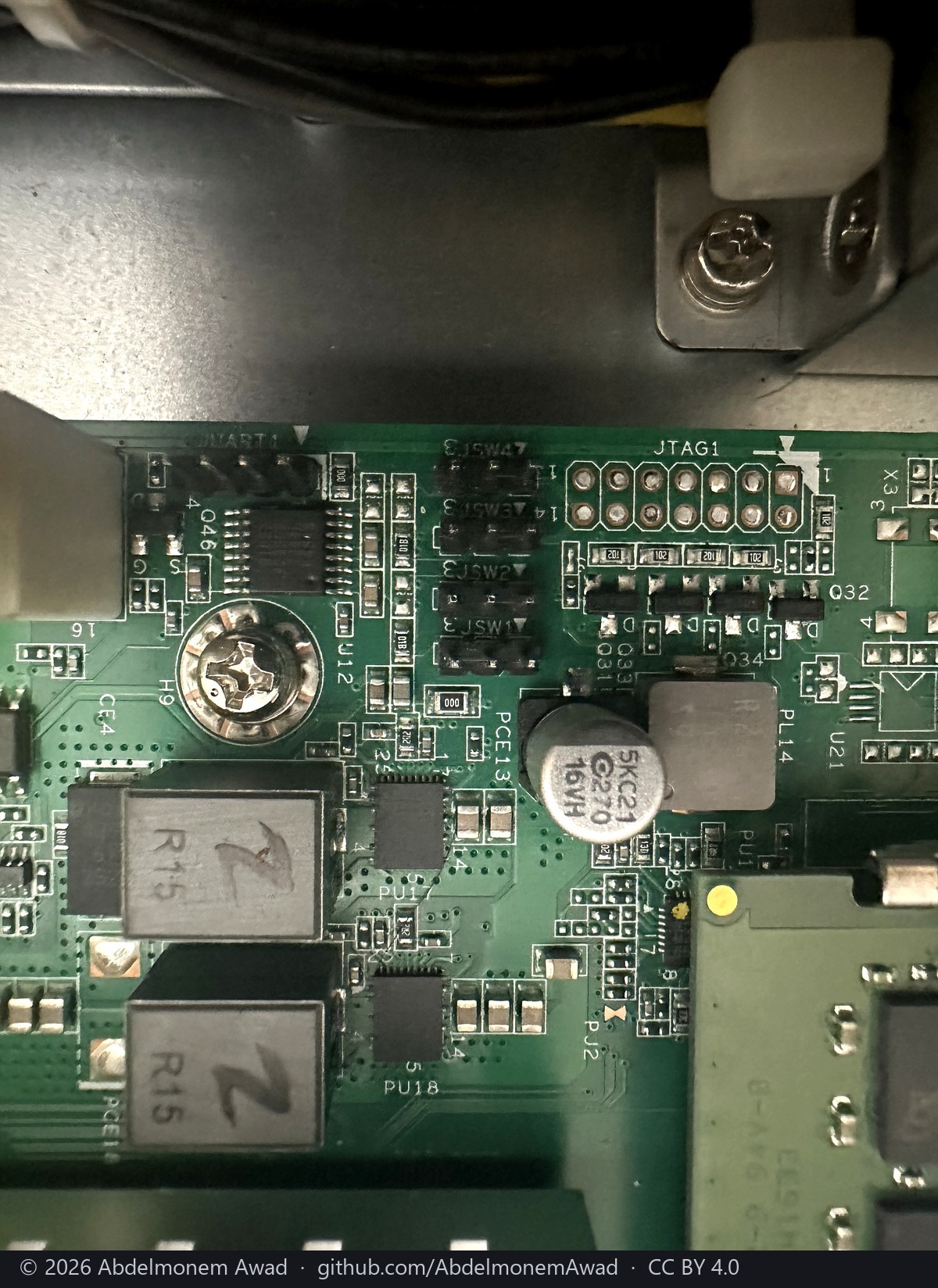
So I took the obvious road first. I bought UART, JTAG and SPI adapters, mapped the headers, and came at the board from underneath: a console on the serial header, the processors through JTAG, the flash through SPI.
A certain failure
It failed - and looking back, it could not have gone any other way. A header is a way in to one chip.
It says nothing about what that chip is doing, what it expects, or what the software on it is waiting
for. Even reading one needs the right details: JUART1, for instance, turned out to be at RS-232
levels, not logic levels, with a transceiver sitting right beside it.
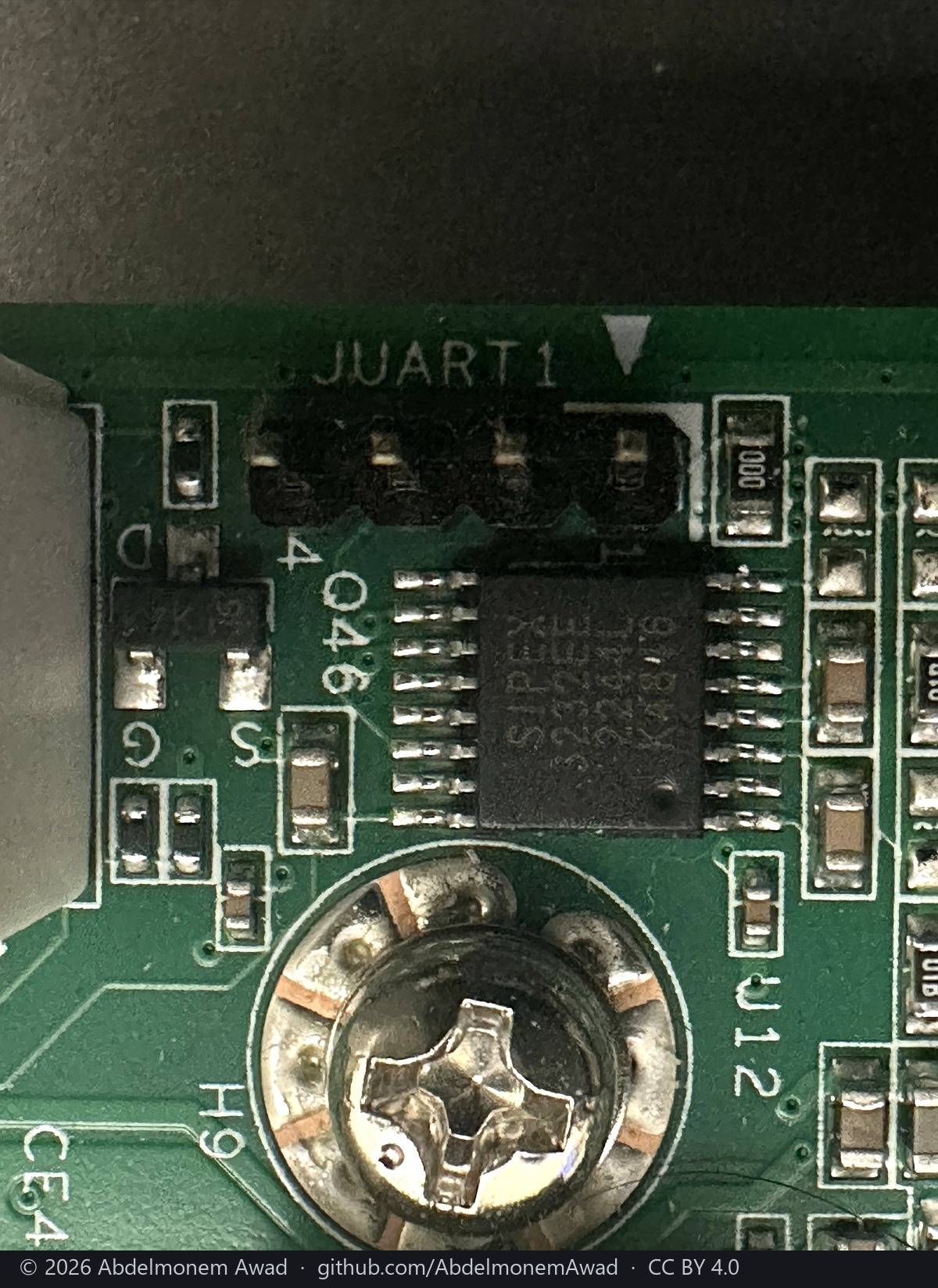
Coming at the hardware from the outside was the expensive way to learn it. What it taught became the first of the project's rules: read the vendor's own sources before probing the hardware.
Tip
My one rule: when the road in front of you is blocked, or the work turns hard, take an hour off and do something completely different. The answer shows up on its own, and it lights up all at once.
Previous: 3. Eight months of looking · Next: 5. Reverse engineering, from the open sources
The discussion of this page is held in the project's GitHub Discussions. Showing it here loads giscus from giscus.app and GitHub, and writing in it needs a GitHub account - what that means.